ED 629 Social Media Blog

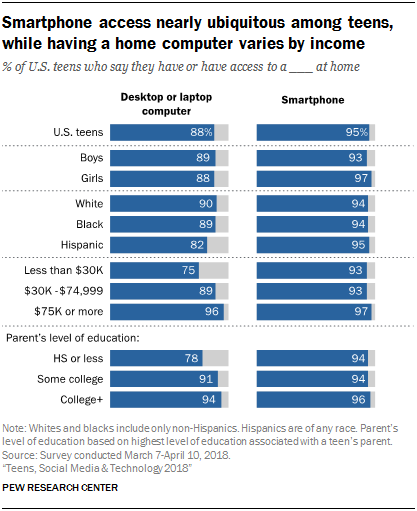
Social media in the classroom has become a hot topic within the last decade. Teens and young adults everywhere are using social media platforms. According to Anderson and Jiang “YouTube, Instagram and Snapchat are the most popular online platforms among teens. Fully 95% of teens have access to a smartphone, and 45% say they are online 'almost constantly' ”(Anderson & Jiang, 3018). Since social media is so popular with tweens, teens, and young adults, why not use it as a resource for education? Research shows that effective communication between the student and the learner helps learning in the classroom (Faizi, Afia & Chiheb, 2013). Facebook, Snapchat and Twitter can serve as backchannels for communication among students and between teachers and students within or between classes. I am considering starting a classroom Snapchat, that I can engage students away from the classroom. I plan on posting problems of the day on the classroom story for students to view and reply back to. I can also post snapshots of what will be happening in class that day. One of the other key aspects of social media is student voice. In every classroom there are some students who are more hesitant to respond to the class and the instructor. In one recent study about the tweeting behavior of undergraduate students in some universities found that among other benefits, Twitter enables students to have “a voice, to be more engaged and to interact more freely with both their peers and the instructor via knowledge sharing and Twitter discussions (Chiwinga, 2017). In my classes in Instructional Technology, I have learned how to use Google Docs for collaboration as well as many other tools to help students collaborate and learn.
Although social media has its positive impacts, it’s important for teachers and educators to think about the cons of social media and how to choose the correct social media platform for the assignment. Troy (2013) suggests that when choosing a social media platform educators should explore the Consortium for School Networking’s Acceptable Use Policies in the web 2.0 and Mobile Era. My school does not allow me to follow students on social media, but I can allow students to follow the account and view post if I decide to create the Snapchat educational account. Students should be learning to create a digital footprint that could possibly grow into a portfolio, all while learning cyber citizenship (Troy, 2013). Students also have to be taught how to use filter bubbles. They must learn how to write and research properly. Misinformation has become a problem as open access to the Internet allows users to share content that has not been vetted (Turner & Hicks, 2017). Teaching students to be MINDFUL readers and writers on social media is a possible solution.

Beware of Fake News!! -Business Insider


Comments
Post a Comment